Enabling creator monetization through seamless tipping
Yoyo
As the sole product designer at Yoyo, I owned design across the entire platform. This case study focuses on the tipping feature, where I made it easier for fans to support creators by embedding tipping into natural content flows.
The challenge was making a payment feel emotional, not transactional. Working with the CEO and engineers, I iterated on entry points and interaction patterns to reduce friction at the moment of support.
Product
Fan-to-Creator Platform
Timeline
Dec 2024 - Jan 2025
Role
Product Designer
Team
CEO, Software Developers
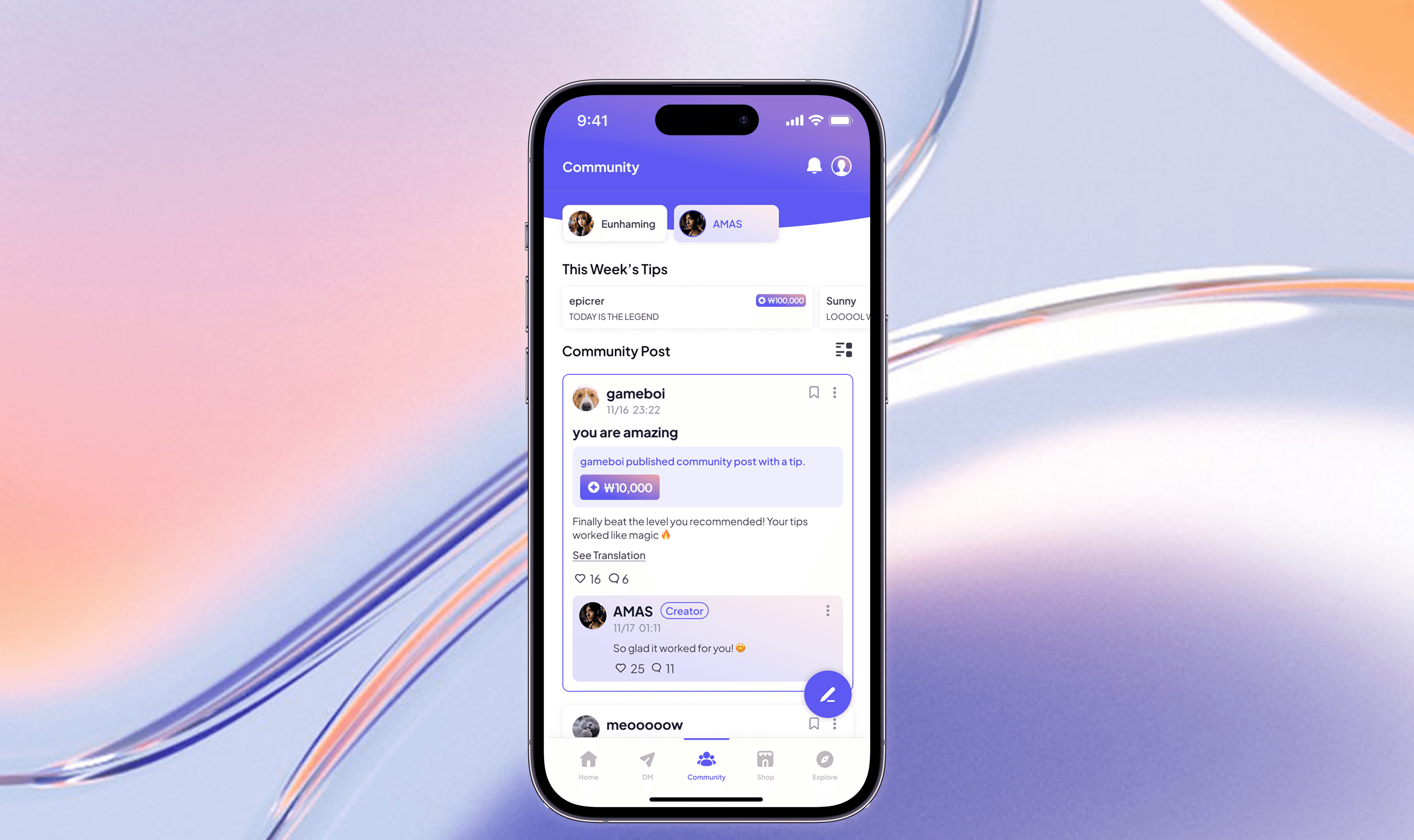
Outcome
↑ Tipping conversion
Fans were more likely to tip when preset amounts were visible, reducing decision friction at the moment of action
↑ Community engagement
More fans appeared on community posts and comment sections after the feature launched
↑ Repeat support
Visible tipping created a social feedback loop — seeing others tip made the behaviour feel natural and rewarding
Context
Expanding tipping to where fans already engage
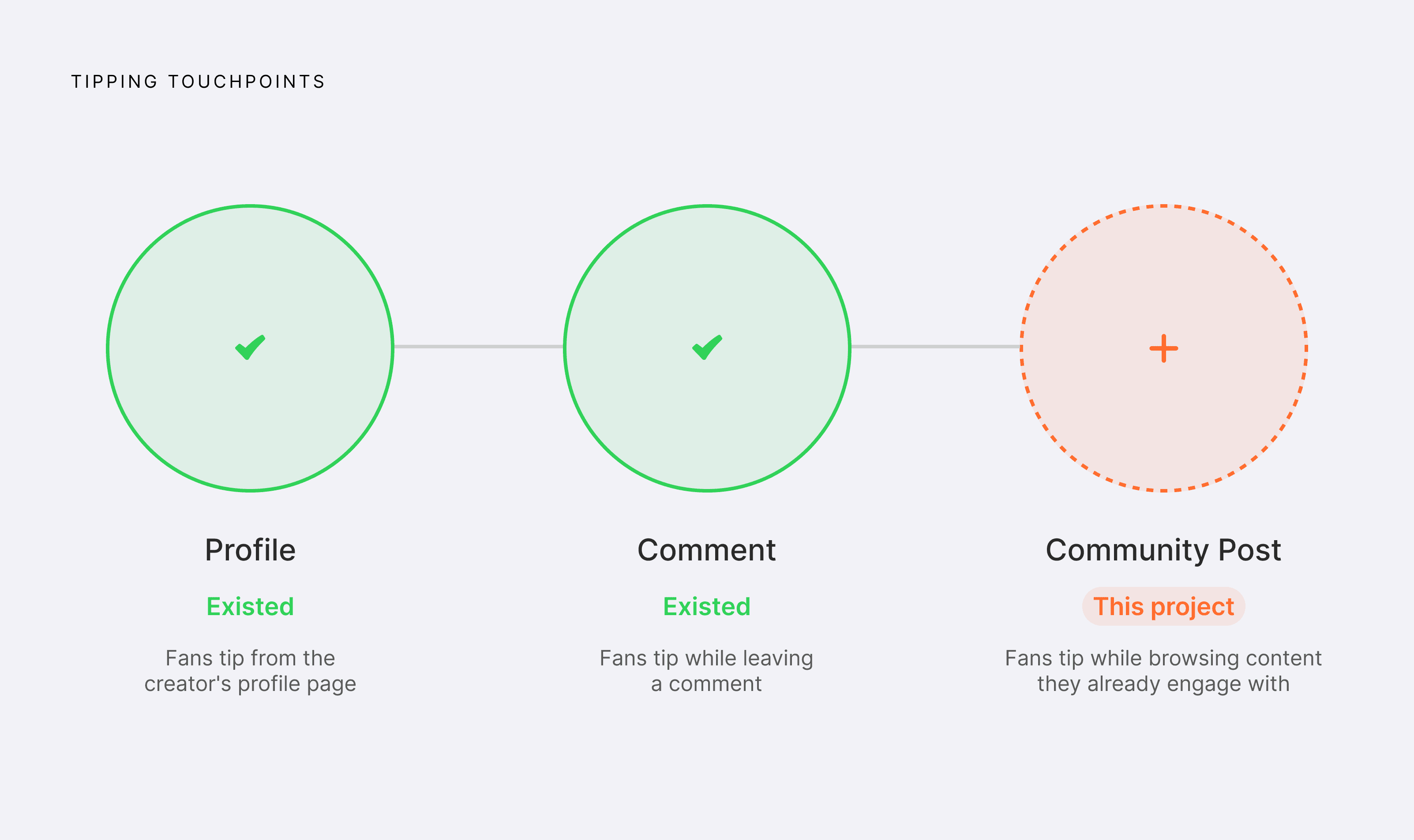
Yoyo is a fan-to-creator subscription platform. Tipping already existed on profiles and comments. The opportunity was bringing it to community posts, where fans are already engaged.
The Problem
Fans wanted to support creators but the experience made them hesitate
When we expanded tipping to more touchpoints, we expected engagement to grow. Instead, we observed friction. Through user feedback and behavioral observation, three issues surfaced:

Low discoverability
Users didn't realize tipping was available on community posts. The feature was invisible in a familiar context.

Unclear affordances
The tipping button wasn't visually distinct from other actions. Users misread it or skipped it entirely.

Decision fatigue
When users did find tipping, the lack of guided options created hesitation — "How much should I tip?"
Problem statement
How might we make tipping feel like a natural part of content engagement rather than a separate transaction?
Approach & Goals
Before designing anything, I needed to understand why existing tipping wasn't working and where the real opportunity lived. I broke this into three areas of investigation.
Existing Tipping
How tipping currently works across profiles and comments
Questions
Where are fans dropping off?
What's the current conversion like?
Methods
Audit existing tipping flows
User Behaviour
Why fans hesitate and what stops them from tipping
Questions
What creates hesitation?
Is it visibility, amount, or timing?
Methods
User feedback analysis
Content Flow
Where fans spend the most time and attention
Questions
Which content surfaces have the highest engagement?
Methods
Content engagement data review with CEO and engineers
Design iteration 01
Tipping in Community Post Creation
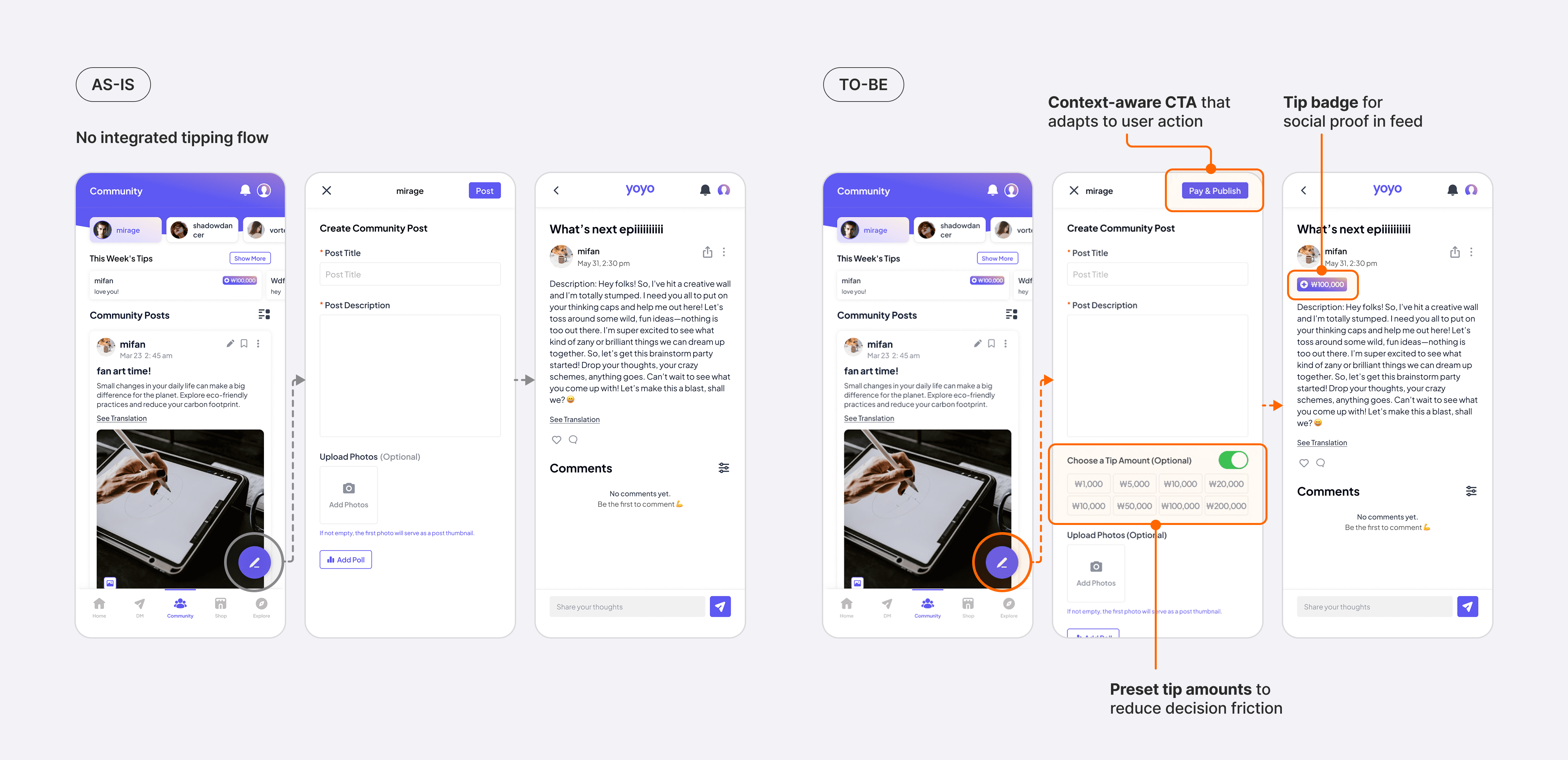
Fans were already creating posts to engage with creators. That made post creation the most natural place to introduce tipping.
Change CTA directly
Replaced the static "Post" button with a context-aware "Pay & Publish" CTA that activates only when a tip is selected — keeping monetization feel native to the publishing flow.
Add selection tip
Preset tip amounts replace a freeform input, lowering the decision barrier and anchoring fan expectations at the point of posting.
Add another price tag
Tip amount surfaces as a visible badge on the post in feed, giving creators social proof and signaling to other fans that tipping is happening.
Design iteration 02
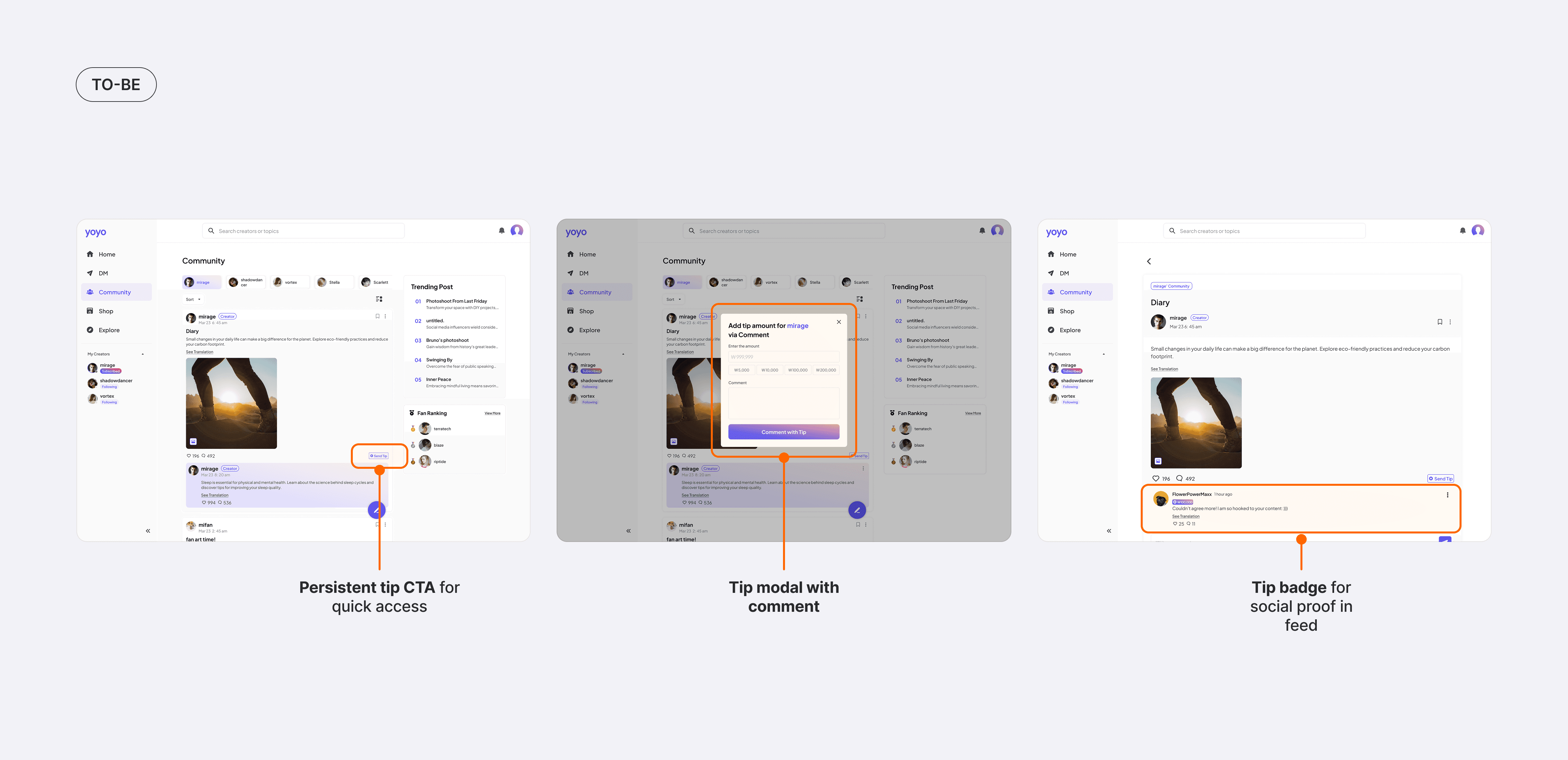
Tipping CTA on the Comment
Add a "Send Tip" button directly on post cards in the content feed — so fans can tip without opening the full post.
Persistent tip CTA for quick access
A tip CTA anchored directly on post cards in the feed meets fans at the moment of discovery — no extra navigation required.
Tip modal with comment
Fans can attach a message to their tip inside a lightweight modal, turning a transaction into a moment of connection without adding friction.
Tip badge for social proof in feed
Sent tips appear as a visible badge in context, creating a passive social proof loop that encourages participation without any extra creator effort.
User feedback
Embedding tipping across the post creation flow and community feed removed the friction that kept fan support separate from content engagement. The opportunity was surfaced where fans were already paying attention.
Creators noticed the difference. One shared that their content revenue had increased noticeably after launch — without changing how they posted or promoted their work.
— Yoyo creator, post-launch feedback
Reflection
What I Learned
Working as the sole product designer at a fast-moving startup taught me as much about collaboration and communication as it did about craft.
Communicating with Developers
Giving feedback required a different mindset — more specific, more actionable. I learned to reference HTML, CSS, and JavaScript when discussing implementation constraints. Speaking their language built trust and reduced back-and-forth.
Exploring Design Systems
This role sparked my interest in scalable design. I started studying design system architecture — token structures, component APIs, documentation patterns — and I'm continuing to deepen this knowledge through structured learning.